
Water treatment in India is no longer just about building drinking-water plants. Cities need better sewage treatment and reuse, industries are under pressure to cut freshwater consumption, and coastal regions are turning more seriously to desalination. Stricter discharge rules are also pushing factories toward membranes, recycling and zero-liquid-discharge systems. This has created a market where municipal EPC contractors, industrial-water specialists and global technology companies compete in very different niches. For readers, the useful question is not simply who is biggest, but who has the right engineering depth, technology and operating experience for a particular water problem. Let’s check out the top 10 water treatment companies in India in 2026.
Top 10 Water Treatment Companies in India at a Glance
| Rank | Company | Known For |
| 1 | VA Tech WABAG | Desalination, municipal and industrial treatment |
| 2 | Ion Exchange India | Industrial water, resins and total water management |
| 3 | L&T Water & Effluent Treatment | Large municipal and industrial EPC |
| 4 | Thermax | Industrial water, wastewater and ZLD |
| 5 | SUEZ India | Drinking water, wastewater and long-term O&M |
| 6 | Tata Projects | Municipal, industrial and desalination EPC |
| 7 | SPML Infra | Urban water supply and sewage infrastructure |
| 8 | Veolia Water Technologies India | Membranes, chemicals and advanced treatment |
| 9 | Aquatech Systems Asia | Industrial reuse, desalination and ZLD |
| 10 | Triveni Water Business | Municipal, industrial and recycle-reuse systems |
1. VA Tech WABAG
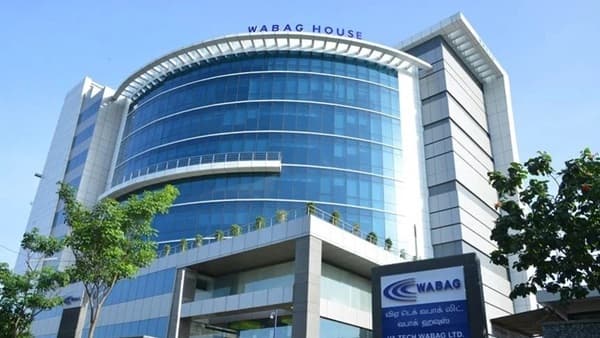
Headquarters: Chennai, Tamil Nadu | Focus: Pure-play water technology and EPC
VA Tech WABAG is the clearest pure-play leader in India’s water-treatment industry. Its business is centred on water and wastewater, with projects covering municipal systems, industry, desalination and reuse in India and overseas.
- Experience across desalination, drinking water, wastewater recycling and sludge treatment
- Operations and projects across multiple international markets
- FY2025-26 annual reporting continues to position WABAG as a global water-treatment specialist
WABAG is particularly strong when a project requires process engineering rather than only civil construction. Its long experience in desalination and reuse also gives it an advantage as Indian cities and industries look for alternatives to fresh groundwater.
2. Ion Exchange India
Headquarters: Mumbai, Maharashtra
Ion Exchange combines treatment plants with resins, membranes, chemicals and long-term water-management services, making it especially relevant to industrial customers that need both equipment and consumables.
- Works across process water, wastewater, recycling and zero liquid discharge
- Maintains specialised subsidiaries and international operations
- Serves industries ranging from pharmaceuticals and power to food and manufacturing
Ion Exchange is often a better fit for industrial customers than a general EPC contractor because it can supply the treatment system, media, resins, chemicals and operating support from within the same group.
3. L&T Water & Effluent Treatment
Part of Larsen & Toubro | Focus: Large-scale EPC and water infrastructure
L&T’s Water & Effluent Treatment business covers potable water, wastewater, industrial effluent, desalination, storage and smart-water infrastructure. Its scale makes it particularly strong in very large public and industrial projects.
- In-house Water Technology Centre supports process and engineering development
- Won a significant 24×7 water-management order in Guwahati in March 2026
- Handles design, construction, SCADA, distribution networks and long-term O&M
L&T is strongest where water treatment is only one part of a much larger infrastructure package. It can combine treatment plants with reservoirs, pumping stations, pipelines, electrical systems and digital monitoring under one EPC contract.
4. Thermax
Headquarters: Pune, Maharashtra
Thermax combines its energy and environmental engineering background with industrial water solutions such as RO, ultrafiltration, demineralisation, recycling and mechanical vapour recompression.
- Large manufacturing base for RO, UF, softeners and DM vessels
- Strong industrial customer base across process industries
- Experience in water reuse and zero-liquid-discharge systems
Thermax is particularly relevant to factories that want water treatment integrated with energy, steam, cooling or environmental systems. Its industrial engineering background helps when wastewater performance needs to be considered alongside the wider plant utility network.
5. SUEZ India
India presence: Since 1978
SUEZ has one of the deepest operating histories among international water companies in India, covering drinking water, wastewater, reuse, networks and long-term O&M.
- More than 300 water and wastewater infrastructure projects in India
- Its plants produce about 7.5 billion litres of safe drinking water each day
- Operates the 564 MLD Okhla wastewater treatment plant in Delhi
SUEZ’s strength is not only building plants but operating them for years. Major references in Delhi, Bengaluru and Mumbai show why the company remains important where municipalities want proven process technology together with long-term performance management.
6. Tata Projects
Headquarters: Mumbai, Maharashtra
Tata Projects provides end-to-end municipal and industrial water infrastructure, including treatment plants, desalination, recycling, distribution systems and river rejuvenation.
- Executed sewage-treatment projects in Ujjain and Bhubaneswar
- Experience in seawater desalination and ocean-intake systems
- Provides packaged RO plants for smaller and rural applications
The company is strongest where treatment must be combined with civil and infrastructure work. Its water portfolio also gives it exposure to river restoration and large urban systems rather than only stand-alone treatment plants.
7. SPML Infra
Headquarters: India | Focus: Municipal water infrastructure
SPML Infra has decades of experience in public water-supply and sewage projects, covering treatment plants, pipelines, reservoirs, pumping stations and long-term O&M.
- More than 700 commissioned infrastructure projects across India
- 200 MLD Jaipur water-treatment plant among its major references
- Won large AMRUT and Jal Jeevan Mission water orders in 2025-26
SPML is particularly strong in city-scale water supply rather than specialised process treatment. Its recent order wins in Indore, Rajasthan and Chennai show that it remains active in the next generation of urban and rural water infrastructure.
8. Veolia Water Technologies India
Major India hub: Hoskote, Bengaluru
Veolia Water Technologies supplies advanced process technologies to Indian industrial and municipal customers. Its Hoskote site near Bengaluru is a major hub for membranes, speciality chemicals and water-treatment systems.
- Hoskote operation completed 25 years in 2026
- Exports advanced water technologies from India to more than 20 countries
- Portfolio includes membranes, wastewater treatment, reuse and zero liquid discharge
Veolia is particularly strong where clients need specialised process technologies rather than conventional civil EPC. Its industrial solutions are widely applicable to pharmaceuticals, chemicals, food, microelectronics and other water-intensive sectors.
9. Aquatech Systems Asia
India office: Pune, Maharashtra
Aquatech specialises in complex industrial-water problems, particularly desalination, reuse and zero liquid discharge, with strong exposure to power, refining, chemicals and steel.
- Strong focus on industrial reuse and zero liquid discharge
- Experience with advanced effluent treatment for Indian steel and power projects
- Offers EPC, membranes, desalination and outsourced water solutions
Aquatech is not a mass municipal contractor. Its strongest position is in projects where wastewater contains complex contaminants or where a plant must recover and reuse as much water as possible.
10. Triveni Water Business
Part of Triveni Engineering & Industries
Triveni’s Water Business Group serves municipal and industrial customers across conventional treatment, desalination, sewage treatment, recycling and zero liquid discharge.
- More than 1,200 operating installations cited by the company
- Over 12,000 MLD of water treated through projects and equipment
- Capabilities include EPC, PPP, HAM and long-term O&M
Triveni is especially relevant in mid-to-large municipal and industrial projects where treatment engineering, equipment manufacturing and operations need to come from one provider. Its project base also extends to Bangladesh and the Maldives.
Conclusion
India’s water-treatment market in 2026 is too diverse for one company to dominate every category. WABAG and Ion Exchange stand out as dedicated specialists; L&T, Tata Projects and SPML bring municipal EPC scale; while Thermax, Veolia and Aquatech are particularly strong in industrial treatment, reuse and ZLD. SUEZ adds deep operating experience. For customers, the right choice depends on water source, plant size, treated-water quality, discharge rules and whether long-term O&M is required. A company that excels at a city-scale project may not be the best fit for a complex industrial ZLD plant.
FAQs
Q1. What is the difference between a water treatment plant and a sewage treatment plant?
A water treatment plant generally converts raw surface water, groundwater or seawater into water suitable for drinking or industrial use. A sewage treatment plant treats wastewater generated by homes, institutions and cities before discharge or reuse.
Q2. What is zero liquid discharge in industrial water treatment?
Zero liquid discharge, or ZLD, is a treatment approach designed to recover and reuse water while reducing liquid waste to almost zero. It usually combines processes such as reverse osmosis, evaporation and crystallisation.
Q3. Why are industries investing more in water recycling?
Freshwater is becoming more expensive and less dependable in many industrial regions. Recycling also helps companies meet discharge regulations, reduce dependence on groundwater and improve resilience during water shortages.
Q4. Is desalination suitable everywhere in India?
No. Desalination is most practical in coastal or brackish-water locations where conventional freshwater is limited. It requires significant energy and careful management of concentrated brine, so it is not automatically the cheapest option.
Q5. What should a company check before selecting a water-treatment EPC contractor?
Relevant project references, process guarantees, energy consumption, membrane or chemical requirements, automation, O&M support and lifecycle cost are more useful than comparing only the initial project price.