
Multi-tenant office hubs are lively, unpredictable environments. On any given day, a building may feel quiet in the morning, bustling by noon, and nearly empty again by late afternoon. This ebb and flow creates both opportunity and operational pressure for property managers and corporate operations leaders responsible for keeping everything running smoothly.
Unlike single-tenant buildings with consistent schedules and predictable staffing requirements, shared office environments operate with overlapping needs. One tenant may host a training event while another runs a hybrid schedule with rotating in-office teams. A third tenant might depend heavily on shared meeting rooms and hospitality services. The result? Workforce planning becomes less about static headcounts and more about coordination, flexibility, and anticipation.
This article explores how multi-tenant office hubs operate, why staffing complexity is growing, and how collaborative workforce strategies can help property leaders prepare for long-term success.
The Unique Nature of Multi-Tenant Office Hubs
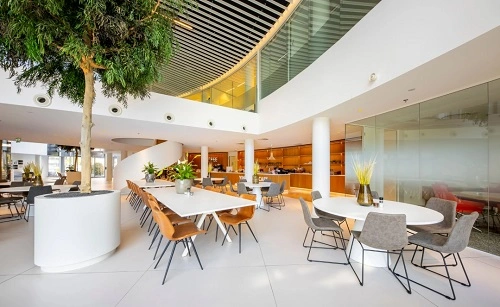
Multi-tenant business parks function like interconnected communities. Tenants operate independently, yet they share infrastructure, amenities, and support staff. Reception teams greet visitors for multiple companies. Security personnel protect a wide range of tenants with different schedules. Cleaning and maintenance teams must adapt to fluctuating space usage across floors and departments.
Research highlights how flexible office environments continue to grow. The 2023 Global Occupier Survey — CBRE Research found that 58% of organizations expect to expand their use of coworking and flexible spaces, while 65% anticipate increasing office attendance requirements within the next three years. That combination means buildings must accommodate both higher attendance and unpredictable scheduling patterns.
For properties such as Business Park Center, the challenge lies in balancing shared services while maintaining a positive experience for each tenant. A well-planned workforce supports tenant satisfaction, improves operational efficiency, and strengthens long-term retention.
Attendance Variability and Its Staffing Impact
Attendance patterns rarely remain consistent throughout the week. Midweek often sees the highest activity levels, while Mondays and Fridays experience lighter traffic. These shifts directly affect staffing needs across front desk operations, security, maintenance, and shared amenity support.
The U.S. Office Occupancy Report 2024 — Kastle Systems shows that average office utilization sits around 50% of pre-pandemic levels. However, Tuesdays reach roughly 60% occupancy, while Fridays drop to nearly 33%. The data, drawn from thousands of buildings and businesses, highlights just how uneven attendance can be.
For workforce planning, this creates a balancing act:
- Overstaffing quiet days increases operational costs
- Understaffing peak days reduces tenant satisfaction
- Irregular occupancy complicates scheduling for service teams
Timing matters. A small staffing adjustment on peak days can dramatically improve the tenant experience.
Hybrid Work and Shared Office Complexity
Hybrid work has reshaped how office hubs function. Many employees split time between home and the office, creating unpredictable building usage patterns that change weekly—or even daily.
According to Gallup’s State of Hybrid Work 2023, 52% of remote-capable employees follow a hybrid model, while 29% work fully remote. Interestingly, hybrid employees report slightly higher engagement levels than those working exclusively on-site.
For property managers, hybrid schedules introduce several questions:
- How should reception staffing align with rotating team schedules?
- When should cleaning teams prioritize shared collaboration areas?
- How can building operations anticipate sudden occupancy spikes?
The answers often involve flexible staffing approaches rather than fixed schedules.
Productivity Expectations Shape Staffing Needs
Workforce planning also connects closely to workplace productivity. A building may offer excellent infrastructure, yet still struggle to support employee performance if staffing levels don’t align with workspace usage.
Insights from the Leesman Index, based on feedback from more than one million employees, show that only 57% feel their workplace supports productivity effectively. Additionally, 73% of employees report needing varied work environments to perform at their best.
This has practical implications. More collaboration zones require attentive cleaning and hospitality support. Quiet spaces need maintenance and noise management. Shared amenities demand coordination between building teams and tenants.
The physical environment and workforce planning strategy cannot be separated.
External Hiring Pressures Affect Building Operations
Property workforce planning doesn’t happen in isolation. Broader labor trends directly influence building staffing capabilities. Talent shortages, wage competition, and shifting employee expectations affect roles such as reception, security, maintenance, and concierge services.
Industry analysis around the top hiring challenges 2026 highlights ongoing recruitment difficulties, evolving candidate priorities, and the growing importance of flexible scheduling.
These pressures often lead to:
- Higher turnover among building support staff
- Longer hiring cycles for specialized roles
- Increased demand for part-time or flexible positions
This environment makes retention and cross-training just as important as recruitment.
Collaborative Workforce Solutions Across Tenants
One of the most effective ways to address staffing complexity is through collaboration. Multi-tenant hubs can reduce duplication, improve service quality, and control costs when property teams and tenants work together.
Shared Service Models
Centralized service teams can support multiple tenants simultaneously. Instead of each tenant hiring separate reception or hospitality staff, properties may offer shared services such as:
- Building-wide reception teams
- Event and meeting support staff
- Concierge services
- Coordinated maintenance scheduling
This approach improves consistency while lowering operational overhead.
Communication and Visibility
Communication plays a surprisingly large role in workforce planning. Tenant announcements about onboarding events, training sessions, or company gatherings can help property teams prepare staffing adjustments ahead of time.
Simple strategies include:
- Monthly tenant coordination meetings
- Shared event calendars
- Occupancy analytics dashboards
- Proactive building updates
Better visibility leads to better workforce decisions.
Flexible Staffing Pools
Some properties maintain flexible staffing pools that expand during busy periods and scale back during quieter days. These pools may include part-time staff, temporary workers, or partnerships with staffing providers.
Flexibility provides coverage without overwhelming core teams.
Supporting Tenant Workforce Coordination
Tenants themselves influence building staffing needs. Encouraging them to share scheduling insights helps property managers allocate resources more effectively.
Property teams can assist tenants by:
- Providing attendance and utilization insights
- Offering workspace planning guidance
- Sharing hybrid scheduling best practices
- Facilitating collaboration between tenants with similar needs
The Office Utilization Benchmark Report 2023 — JLL Research found that buildings with flexible configurations and shared amenities achieve tenant retention rates above 80%. Workforce planning plays a significant role in achieving that outcome.
Future-Ready Workforce Planning Strategies
Looking ahead, workforce planning within multi-tenant hubs will rely on adaptability, technology, and employee experience.
Data-Informed Staffing
Access card data, booking trends, and occupancy analytics help property teams make informed staffing adjustments. Instead of relying on assumptions, managers can align workforce levels with actual building behavior.
Examples include:
- Scheduling cleaning teams based on meeting room usage
- Increasing security coverage during peak entry hours
- Adjusting reception staffing during onboarding cycles
Small changes driven by data can produce meaningful improvements.
Cross-Trained Staff
Versatility strengthens operational resilience. Staff capable of supporting reception, hospitality, and tenant coordination provide broader coverage and reduce dependency on specialized roles.
Cross-training also improves employee engagement by introducing variety into daily responsibilities.
Workforce Experience as a Competitive Advantage
Tenant satisfaction often depends on the quality of human interactions within the building. Friendly reception teams, responsive maintenance staff, and well-managed shared amenities contribute to the overall workplace experience.
Workforce planning, therefore, becomes part of tenant retention strategy—not just operational management.
Creating Accessible Hiring Pathways Within Office Hubs
Multi-tenant office environments generate a wide range of employment opportunities, from entry-level hospitality roles to specialized facilities management positions. Many candidates exploring these roles seek guidance on how to get hired fast, particularly when entering workplace support positions for the first time.
Property managers can strengthen workforce stability by supporting accessible hiring pathways through:
- Partnerships with local workforce training programs
- Internship-style property operations roles
- Clear onboarding and mentorship processes
- Career development opportunities within building teams
Accessible hiring pipelines benefit both property teams and local communities.
Conclusion
Workforce planning for multi-tenant office hubs requires a thoughtful, adaptive approach. Shared environments introduce variability in attendance, diverse tenant expectations, and overlapping service requirements that make traditional staffing models less effective.
Research shows that flexible workspace usage continues to expand, attendance remains uneven throughout the week, and hybrid work patterns shape how employees engage with office environments. At the same time, hiring pressures and productivity expectations add further complexity to building operations.
Yet these challenges also present opportunity.
Collaborative service models, flexible staffing pools, and improved communication between tenants and property teams can significantly improve operational efficiency. Data-informed planning, cross-trained staff, and experience-focused workforce strategies help create environments where tenants feel supported and employees can perform effectively.
Ultimately, successful workforce planning within multi-tenant hubs is about responsiveness. Buildings that anticipate change, adapt staffing to real usage patterns, and prioritize tenant experience will be better positioned to maintain satisfaction, retention, and long-term operational stability.
Thoughtful coordination.
Flexible staffing.
Stronger collaboration.
That’s the future of workforce planning in shared office environments.