
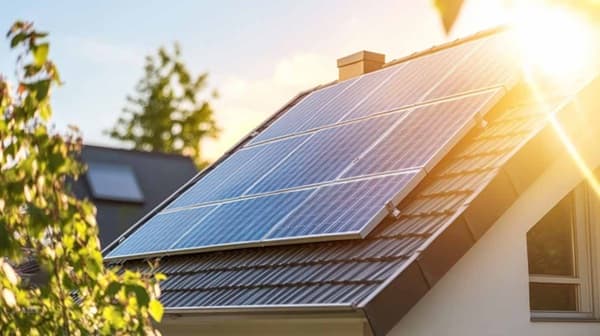
Solar panel types continue to advance as renewable energy expands. N-Type and P-Type solar cells form the foundation of photovoltaic technology. Their structural differences explain the rising preference for N-Type solar panels. This evolution supports a reliable power supply for applications including green energy and grid reinforcement.
Core Differences in Solar Cell Design
P-Type solar cells incorporate silicon doped with boron, generating positive charge carriers known as holes. When sunlight strikes, electrons from the N-layer recombine with these holes to produce an electric current. N-Type cells employ phosphorus doping in the base layer, providing electrons as the primary charge carriers, complemented by a thin P-Type emitter.
N-Type cell designs optimize light absorption through a thick base layer that captures photons effectively, paired with a shallow emitter to minimize recombination losses, in which charge carriers annihilate without contributing to the output. P-Type cell configurations require thicker layers, thereby increasing such losses. Advanced passivation techniques in N-Type cells further protect surfaces, enhancing carrier lifetime and collection efficiency. These foundational distinctions set the stage for performance disparities observed in field conditions.
Efficiency and Power Output Gains
N-Type solar cells consistently achieve superior module efficiency. Conventional P-Type PERC modules operate at 18-23% efficiency, approaching their theoretical ceiling of 24.5%. In contrast, N-Type technologies such as TOPCon deliver 22-25% or higher, with potential for continued improvement.
Bifacial capability represents a key advantage. N-Type cells attain 85-95% bifaciality, enabling effective capture of reflected light from the rear surface. P-Type PERC modules manage about 75% bifaciality. In reflective settings like sandy terrains, bifacial N-Type yields increase by 10-30%. Reputable renewable energy companies like Avaada manufacture bifacial N-Type TOPCon modules rated at 610-720 Wp, ideal for large-scale solar installations. India’s 37.9 GW of solar additions in 2025 underscores this technology’s role. Higher wattage directly translates to more power per unit area, optimizing land use in utility projects.
Must Read:- India’s Mission Green Hydrogen
Degradation Resistance Over Time
Degradation mechanisms pose significant long-term challenges. P-Type cells suffer light-induced degradation (LID) from boron-oxygen complexes, resulting in 1-3% initial power loss. N-Type cells, lacking boron in the base, experience less than 0.5% LID.
Potential-induced degradation (PID) issues in P-Type devices, where high voltage prompts ion migration and leakage currents up to 30%. N-Type’s higher material purity confers superior PID resistance. Annual degradation rates stand at 0.34% for P-Type and 0.30% for N-Type; over 25-30 years, N-Type preserves 2-5% additional capacity. Recent studies indicate 20% of panels degrade beyond projections, emphasizing N-Type durability. This longevity reduces the levelized cost of energy, particularly in extended warranties exceeding 30 years.
Temperature Performance in Real Conditions
Elevated temperatures reduce the open-circuit voltage of solar cells. P-Type modules exhibit coefficients of -0.34% to -0.40% per °C. N-Type achieves -0.28% to -0.32% per °C. A 35°C increase in temperature yields a 10.5% loss for N-Type versus 11.9% for P-Type, a 1.4% differential.
In regions like India’s Rajasthan and Gujarat, where temperatures exceed 45°C, N-Type maintains output stability. N-Type silicon has fewer defects, so it loses less power to heat. This keeps performance steady during hot weather, key for solar-storage hybrids. Real-world data from power plants shows N-Type delivers more energy yearly, no matter the climate.
Key Comparison Table: N-Type vs. P-Type Solar Cells
| Parameter | P-Type (e.g., PERC) | N-Type (e.g., TOPCon) |
| Efficiency Range | 18-23% | 22-25%+ |
| Bifaciality | ~75% | 85-95% |
| LID | 1-3% | <0.5% |
| Temp. Coefficient | -0.34-0.40%/°C | -0.28-0.32%/°C |
| Annual Degradation | 0.34% | 0.30% |
| PID Resistance | Moderate | High |
| Cost Premium (2025) | Baseline | Near parity |
Role in Advanced Applications
N-Type cells integrate seamlessly with energy storage and green fuel energy systems. Bifacial TOPCon modules pair effectively with BESS, delivering firm dispatchable power. India mandates up to 50% local content in solar farm batteries, promoting these hybrids.
Green hydrogen production requires stable inputs; N-Type reliability supports electrolyzers. Over 130 GWh in storage tenders occurred in 2025, with 9.2 GWh slated for 2026 commissioning. Rajasthan’s grid limitations further value N-Type’s consistent output. Captive projects for industries benefit from reduced intermittency.
Manufacturing and Supply Chain Edge
Fully integrated facilities, from ingots through modules, optimize N-Type production. In-house control over wafers, cells, glass, and frames minimizes disruptions. Global standards, including IEC, BIS, and UL, certify module reliability.
India’s 6.3 GW in wind additions in 2025 complement solar expansions, underscoring the need for versatile panels. Localized manufacturing aligns with policies favoring domestic components, enhancing energy security for green fuels energy initiatives. Quality control in integrated lines yields lower defect rates and predictable performance.
Final Thoughts
N-Type solar cells surpass P-Type cells in efficiency, durability, thermal stability, and system compatibility, fueling widespread adoption. Solar panel types using N-Type cells advance the integration of green fuels and renewable reliability. With costs converging, this technology underpins sustainable power infrastructure.