
India’s investment banking business is in an active but more selective phase in 2026. IPOs remain important, but private-equity exits, block deals, qualified institutional placements, cross-border acquisitions and structured fundraising are also generating mandates. The firms that stand out now are those that can combine transaction advice with investor access, sector knowledge and execution. Global banks continue to dominate many large cross-border deals, while Indian firms retain a strong edge in domestic equity capital markets and promoter-led transactions. With fee pools and league-table positions shifting through the year, this list focuses on firms that have stood out through current deal activity, market presence and breadth of advisory work. Let’s check out the top 10 investment banking companies in India in 2026.
Top 10 Investment Banking Companies in India at a Glance
| Rank | Company | Known For |
| 1 | Citi India | Cross-border advisory and capital markets |
| 2 | Kotak Investment Banking | IPOs, ECM and M&A |
| 3 | Morgan Stanley India | Large M&A and institutional transactions |
| 4 | J.P. Morgan India | Cross-border M&A and capital raising |
| 5 | Goldman Sachs India | M&A, financing and capital solutions |
| 6 | Jefferies India | ECM, M&A and institutional distribution |
| 7 | JM Financial | Domestic capital markets and restructuring |
| 8 | Axis Capital | ECM, QIPs, InvITs and REITs |
| 9 | SBI Capital Markets | Project finance, DCM and advisory |
| 10 | Avendus Capital | Mid-market M&A and private capital |
1. Citi India
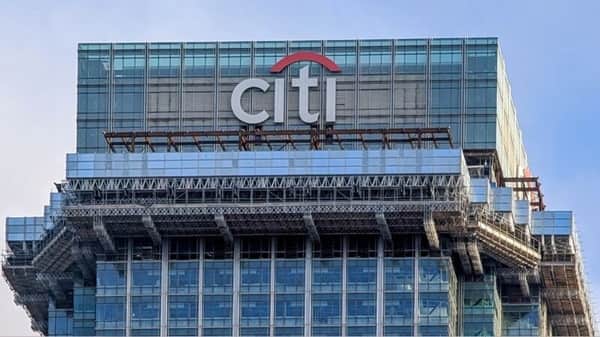
India presence: More than a century
Citi has had one of the strongest runs in Indian investment banking in 2026. Its advantage is a long-standing local franchise backed by a global network that can connect Indian companies with international investors, buyers and financing markets.
- H1 2026 India investment-banking fees of about $60.3 million
- Around 9.8% share of the domestic fee pool
- Strong cross-border and institutional connectivity
Citi’s lead in the H1 2026 fee table reflects strength across several product areas. It is especially relevant for large companies considering overseas acquisitions, equity raises or international financing.
2. Kotak Investment Banking
Headquarters: Mumbai | Part of Kotak Mahindra Group
Kotak Investment Banking is one of India’s strongest home-grown franchises. Its work spans IPOs, follow-on offerings, block trades, private capital, restructuring and mergers and acquisitions.
- Led India’s equity-capital-markets league table in H1 2026
- About 13.75% ECM market share in the first half
- Long track record with Indian promoters and institutional investors
Kotak’s edge is execution. In a market where pricing, timing and investor placement can decide the outcome of an issue, its domestic distribution and capital-markets experience remain important.
3. Morgan Stanley India
India presence: Since the 1990s
Morgan Stanley remains one of the most visible global advisers on large India-linked transactions. Its India franchise is particularly strong in strategic M&A, major equity offerings and private-equity-backed deals.
- First by disclosed India-linked M&A value in Jan–Jun 2026
- Three tracked transactions worth about $4.72 billion
- Strong global investor and buyer network
The firm’s position is less about deal count than the size and complexity of its mandates. That keeps it among the leading choices for large strategic transactions.
4. J.P. Morgan India
India role: Corporate and investment banking
J.P. Morgan advises Indian companies on acquisitions, divestments, financing and capital-market transactions. Its global reach is especially useful when an Indian company is buying overseas or needs access to several financing markets.
- Second by India-linked M&A value in H1 2026
- About $4.56 billion across two tracked deals
- Deep debt, equity and cross-border M&A capability
Indian outbound M&A has become a major 2026 theme, with companies looking overseas for technology, resources, brands and supply-chain security. That trend fits J.P. Morgan’s international strengths.
5. Goldman Sachs India
India investment-banking office: Mumbai
Goldman Sachs advises major Indian companies, institutional investors and financial sponsors on M&A, financing and capital-market transactions. Its Mumbai team is supported by large operating hubs in Bengaluru and Hyderabad.
- Third by disclosed India-linked M&A value in H1 2026
- Two tracked deals worth about $4.06 billion
- Broad capability across M&A and financing
Goldman tends to appear on complex, high-value mandates where structuring and global investor access matter. Its large India workforce also gives the advisory business strong research and execution support.
6. Jefferies India
India base: Mumbai
Jefferies has become a much more important name in Indian investment banking over the last few years. It combines advisory work with strong institutional equities and global distribution, making it particularly relevant in IPOs, block trades and capital raising.
- India’s leading investment-banking fee earner in 2025
- About $98.9 million in India fees during 2025
- Strong ECM, M&A and institutional placement capabilities
Jefferies has continued to appear on major Indian transactions in 2026. Its strength lies in pairing deal execution with access to a broad institutional investor base.
7. JM Financial
Headquarters: Mumbai
JM Financial is one of India’s most established domestic investment-banking groups. Its services cover IPOs, follow-on offerings, debt issues, M&A, restructuring and private-capital transactions.
- 41 capital-market transactions completed in FY26
- Aggregate transaction value of about ₹95,000 crore
- IPO documents filed for issues worth roughly ₹1.4 lakh crore
JM Financial remains strongest where knowledge of Indian promoters, regulations and public-market processes is critical. Its recent mandate pipeline has included financial-services, logistics and renewable-energy issuers.
8. Axis Capital
Headquarters: Mumbai | Wholly owned by Axis Bank
Axis Capital has built a strong reputation in Indian equity capital markets. Its services include IPOs, QIPs, M&A, private fundraising, InvITs, REITs and institutional equities.
- Long-established domestic ECM franchise
- Strong experience in IPOs, QIPs, InvITs and REITs
- Access to the wider Axis Bank corporate network
Its roots in ENAM Securities give Axis Capital a long history in equity issuance and promoter relationships. It remains one of the key domestic houses in public-market fundraising.
9. SBI Capital Markets
Founded: 1986 | Headquarters: Mumbai
SBI Capital Markets, or SBICAPS, is the investment-banking arm of State Bank of India. Its work spans merchant banking, project advisory, debt syndication, equity capital markets and corporate finance.
- Wholly owned by India’s largest public-sector bank
- SEBI-registered Category I merchant banker
- Strong infrastructure and project-finance experience
SBICAPS benefits from the wider SBI ecosystem and decades of experience in large Indian financing mandates. It continues to appear on major IPO and infrastructure assignments in 2026.
10. Avendus Capital
Founded: 1999 | Headquarters: Mumbai
Avendus has built a distinct position in technology, consumer, financial services and new-economy advisory. It is particularly active in founder-led, private-equity-backed and mid-market transactions.
- 12 India-linked M&A deals tracked in H1 2026
- Aggregate disclosed value of about $1.91 billion
- Strong private-capital and technology-sector relationships
Avendus is especially relevant for companies moving from private funding toward strategic sales, institutional capital or a future public-market transaction.
Conclusion
India’s investment-banking market in 2026 is split between global firms with cross-border reach and domestic banks with deep capital-market relationships. Citi has led the fee rankings this year, while Kotak remains especially strong in equity capital markets. Morgan Stanley, J.P. Morgan and Goldman Sachs are prominent in large M&A situations, and Jefferies has built a powerful India franchise. JM Financial, Axis Capital and SBI Capital Markets remain important domestic institutions, while Avendus stands out in growth-company and mid-market deals. The right bank ultimately depends on the transaction: an IPO, an outbound acquisition and a private-equity exit each require a different mix of sector knowledge, distribution and execution.
FAQs
Q1. What is the difference between investment banking and merchant banking in India?
Investment banking is a broad term covering M&A advice, capital raising and strategic transactions. Merchant banking is a regulated activity in India and commonly includes managing public issues and related securities-market work.
Q2. Why do companies appoint several investment banks for a large IPO?
Large IPOs involve valuation, documentation, investor marketing, book building and distribution. Using several banks can widen institutional reach and spread the workload.
Q3. Do investment banks invest their own money in client companies?
Sometimes, but advisory and principal investing are separate activities. A financial group may have investment or asset-management businesses subject to separate controls and regulation.
Q4. Are boutique investment banks important in India?
Yes. Boutique firms can be highly competitive in technology, healthcare, consumer and mid-market M&A because they often offer deeper sector specialization and more senior attention.
Q5. What is the difference between ECM and DCM?
ECM, or equity capital markets, covers equity fundraising such as IPOs and follow-on issues. DCM, or debt capital markets, focuses on bonds and other debt instruments.