
India’s bicycle market in 2026 is no longer limited to school cycles and basic roadsters. Buyers now choose from mountain bikes, hybrids, premium recreational models and electric cycles, while online retail has made specifications and prices much easier to compare. Traditional manufacturers still control much of the market, but newer brands have changed how bicycles are designed, marketed and sold. Industry estimates place the Indian bicycle market at about $1.15 billion in 2026, supported by fitness, recreation, short-distance mobility and growing interest in e-cycles. For readers, the useful question is not simply which company is biggest.
A commuter, a teenager buying an MTB and a fitness rider looking for a lighter geared cycle need very different products. The companies below stand out for manufacturing scale, product range, dealer reach, brand relevance and the ability to serve those different buyers. Let’s check out the top 10 cycle companies in India in 2026.
Top 10 Cycle Companies in India at a Glance
| Rank | Company | Base | Known For |
| 1 | Hero Cycles | Ludhiana / Gurugram | Mass-market scale and range |
| 2 | TI Cycles of India | Chennai | Hercules, BSA and Montra |
| 3 | Avon Cycles | Ludhiana | Manufacturing and dealer reach |
| 4 | Leader Cycles | Ludhiana | Value MTBs and online sales |
| 5 | Ninety One | Ahmedabad | Design-led, digital-first cycles |
| 6 | Firefox Bikes | Gurugram | Premium recreational cycling |
| 7 | Stryder | Ludhiana | Tata-backed retail network |
| 8 | Geekay Bikes | India operations | MTBs, kids bikes and e-cycles |
| 9 | Kross Bikes | Ludhiana | Performance and lifestyle cycles |
| 10 | Cradiac | India operations | Online-led geared and MTB range |
1. Hero Cycles
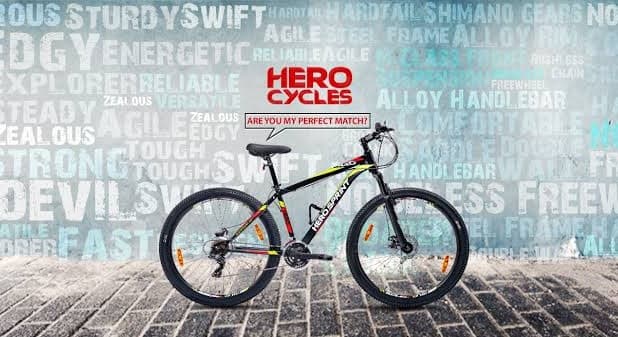
Founded: 1956 | Founder: O.P. Munjal | Major base: Ludhiana
Hero Cycles remains the most influential name in the Indian bicycle business. Its advantage is scale: decades of manufacturing, sourcing and distribution have created a reach few rivals can match. The range now extends well beyond traditional commuters into kids’ bikes, mountain bikes, geared cycles and electric mobility.
- Annual manufacturing capacity above 7.5 million cycles
- Factories in Punjab, Bihar and Uttar Pradesh
- Premium presence strengthened through Firefox Bikes
Hero’s official dealer material has cited an India market share above 43%. Its challenge now is to preserve that mass-market strength while appealing to younger riders who compare design, components and riding style as closely as price.
2. TI Cycles of India
Established: 1949 | Part of Tube Investments of India / Murugappa Group
TI Cycles competes through several familiar brands rather than a single identity. BSA covers family and city riding, Hercules remains strong in youth and utility bicycles, while Montra targets riders looking for lighter, more performance-oriented machines.
- Portfolio includes BSA, Hercules and Montra
- More than 175 Track & Trail stores
- Range spans basic family cycles to premium sport bikes
That breadth is TI Cycles’ main advantage. A buyer can move from a simple everyday cycle to a better-equipped hybrid or MTB without leaving the company’s wider retail ecosystem.
3. Avon Cycles
Founded: 1951 | Headquarters: Ludhiana, Punjab
Avon is one of the pillars of Indian bicycle manufacturing. It combines large-scale production with a deep dealer network and an export business that reaches well beyond India. Its current portfolio includes roadsters, MTBs, geared cycles, kids’ models and electric cycles.
- More than 14,000 dealers listed by the company
- Four manufacturing units
- About 3.2 million bicycles produced in FY2024-25
- Exports to more than 80 countries
Avon’s appeal is simple: availability, familiar engineering and a wide price ladder. Few Indian cycle companies match its combination of factory scale and physical retail reach.
4. Leader Cycles
Manufacturing roots: 1977 | Base: Ludhiana
Leader has become highly visible among buyers looking for affordable mountain bikes and geared bicycles online. Its growth reflects a wider shift in the market, where many customers now compare specifications and prices digitally before visiting a store.
- Strong presence in entry and mid-priced MTBs
- Range includes kids’ cycles, hybrids and e-bikes
- Dealer reach across more than 200 cities, according to the company
Leader is particularly relevant to value-conscious buyers who want modern styling without moving into premium pricing. Its mix of domestic manufacturing and e-commerce visibility has helped it compete with much older brands.
5. Ninety One
Operated by: AlphaVector (India) Private Limited
Ninety One helped push Indian cycling toward a more lifestyle-led image. Its mountain bikes, hybrids, kids’ cycles and electric products are aimed largely at younger urban riders who care about appearance, fitness and recreational use as much as basic transport.
- Strong direct-to-consumer online presence
- Wide range of MTBs, hybrids and e-cycles
- Products manufactured and marketed in India by AlphaVector
The brand’s strength is not old manufacturing heritage but modern positioning. It competes on styling, digital buying experience and product presentation, giving it a different audience from traditional roadster makers.
6. Firefox Bikes
Launched: 2005 | Part of Hero Cycles since 2015
Firefox helped establish a premium recreational cycling category in India when the market was still dominated by basic commuter bicycles. Its portfolio covers mountain, hybrid, road, gravel, kids’ and electric bikes.
- Strong recognition in premium recreational cycling
- Range extends beyond MTBs into road and hybrid formats
- Backed by Hero Cycles’ wider infrastructure
Firefox is best suited to riders who see cycling as fitness, sport or weekend recreation. Its appeal grows as buyers become more willing to pay for lighter frames, better components and a bike designed for a specific style of riding.
7. Stryder
Part of Tata International | Domestic retail launch: 2009
Stryder brings the Tata name into the bicycle market but stands on more than parentage. It sells e-bikes, premium cycles, MTBs, roadsters and kids’ models, supported by a sizeable physical retail network.
- Wholly owned by Tata International
- Available through more than 4,000 retail outlets
- Exports to SAARC, Africa and Middle East markets
For buyers who prefer to inspect a cycle, check sizing and rely on a nearby dealer, Stryder’s retail reach is a practical advantage. It also gives the brand relevance outside the online-first urban market.
8. Geekay Bikes
Operating history: Since 1961
Geekay has built a broad catalogue covering mountain bikes, kids’ cycles, geared bicycles and electric models. It also sells electric conversion kits and parts, giving the business a wider mobility footprint than many conventional cycle brands.
- MTBs, kids’ cycles, hybrids and e-bikes in the range
- Electric conversion kits available
- Pan-India online delivery and support
Geekay is most relevant to buyers looking for choice across conventional and electric bicycles without entering very high premium pricing. Its e-cycle products also make it useful to riders exploring assisted mobility.
9. Kross Bikes
India base: Ludhiana | Associated with Hero Ecotech
Kross operates in the more design- and performance-oriented part of the Indian bicycle market. Its Ludhiana base places it within India’s largest bicycle-manufacturing cluster, where component sourcing and production expertise are well established.
- Focus on lifestyle and recreational bicycles
- Backed by Hero Ecotech’s manufacturing experience
- Part of the Ludhiana bicycle ecosystem
Kross does not have the mass visibility of Hero or Avon, but it adds useful depth to the market for buyers looking beyond basic utility cycles toward more style- and performance-focused products.
10. Cradiac
Focus: Mountain, geared, hybrid and electric cycles
Cradiac has grown largely through online retail, where detailed specifications and aggressive value positioning appeal to first-time MTB and geared-cycle buyers. Its range stretches from steel-frame entry models to alloy bikes with multi-speed drivetrains and upgraded braking.
- Strong online presence in MTBs and geared bicycles
- Electric cycles included in the current range
- Dealer listings across many Indian cities
Cradiac represents the newer competition facing established manufacturers. It cannot match the scale of the top three, but it competes effectively by making specifications, prices and direct purchasing easy to compare.
Conclusion
India’s bicycle industry in 2026 combines old manufacturing strength with new buying habits. Hero Cycles, TI Cycles and Avon still define the market in scale, legacy and distribution. Leader and Ninety One show how e-commerce and modern design have opened space for challengers, while Firefox and Kross serve more recreational riders. Stryder brings a large physical retail network, and Geekay and Cradiac add choice in the online and electric-cycle segments.
FAQs
Q1. Should I buy a cycle online or from a local dealer?
Online buying gives you more models and easier price comparison, while a dealer lets you check frame size, riding position and assembly before purchase. First-time buyers often benefit from a physical fit check.
Q2. How do I know which cycle size is right for me?
Wheel size alone is not enough. Frame size and rider height matter more. Always check the manufacturer’s sizing chart, especially for 27.5-inch and 29-inch mountain bikes.
Q3. Are expensive geared cycles always easier to ride?
No. Gears help on climbs and changing terrain, but a heavy or poorly fitted cycle can still feel difficult. On flat daily routes, a good single-speed bicycle may be simpler and cheaper to maintain.
Q4. What should I check before buying an electric cycle?
Compare battery capacity, claimed range, motor type, charging time, replacement-battery availability, warranty and local service. Real-world range varies with rider weight, terrain and assistance level.
Q5. How often should a bicycle be serviced?
Regular riders should inspect brakes, tyres, chain and gears every few months. Cycles used daily or ridden in rain, dust or rough conditions may need attention more often.