
India’s service-based technology companies remain central to the country’s place in the global digital economy. They build software, manage cloud systems, modernize banking platforms, run cybersecurity operations and support large enterprises across dozens of countries. In 2026, the sector is changing quickly as clients spend more on artificial intelligence, cloud transformation and automation while becoming more selective about traditional outsourcing.
That makes scale important, but so are engineering depth, industry knowledge and the ability to deliver measurable business outcomes. This list focuses on major India-headquartered listed technology-service companies, with FY2025-26 revenue used as a practical scale reference. Revenue does not make one company automatically better than another, but it gives readers a consistent way to compare firms operating across different service niches. Let’s check out the top 10 service-based companies in India in 2026.
Top 10 Service-Based Companies in India at a Glance
| Rank | Company | FY2025-26 Revenue | Core Services |
| 1 | Tata Consultancy Services | ₹2.67 lakh crore | IT services, consulting, cloud, AI |
| 2 | Infosys | ₹1.79 lakh crore | Digital transformation, consulting, AI |
| 3 | HCLTech | ₹1.30 lakh crore | IT services, engineering, cloud |
| 4 | Wipro | ₹92,620 crore | Consulting, IT services, cybersecurity |
| 5 | Tech Mahindra | ₹56,815 crore | Telecom, enterprise technology, AI |
| 6 | LTM (formerly LTIMindtree) | ₹42,308 crore | Digital engineering, cloud, data |
| 7 | Coforge | ₹16,421 crore | AI-led engineering and digital services |
| 8 | Mphasis | ₹15,880 crore | Cloud, applications and BFSI technology |
| 9 | Persistent Systems | ₹14,748 crore | Digital engineering, cloud and AI |
| 10 | Zensar Technologies | ₹5,687 crore | Experience, engineering and digital services |
1. Tata Consultancy Services (TCS)
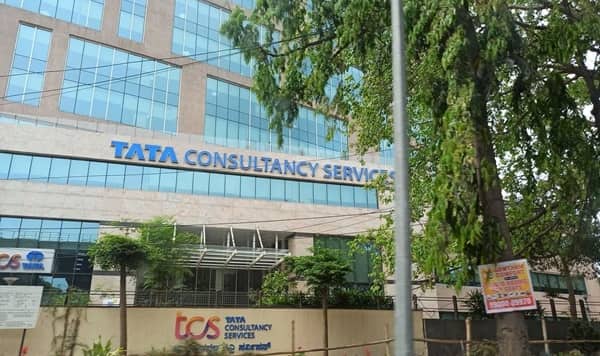
Founded: 1968 | Headquarters: Mumbai, Maharashtra | Tata Group
TCS is India’s largest technology-services company by a wide margin. It works with banks, manufacturers, retailers, telecom companies and public-sector organizations on software, consulting, cloud, cybersecurity, data and business transformation.
Key strengths
- FY2025-26 revenue of ₹2.67 lakh crore
- More than 5.84 lakh employees at the end of FY26
- Large global delivery network across major enterprise sectors
TCS reported FY26 profit after tax of ₹52,820 crore. In 2026, its biggest strategic task is turning AI adoption into new revenue while clients simultaneously expect higher productivity and lower delivery costs.
2. Infosys
Founded: 1981 | Headquarters: Bengaluru, Karnataka
Infosys is one of India’s best-known global technology-service companies. Its work covers consulting, application development, cloud, cybersecurity, data analytics and digital transformation for large enterprises.
Key strengths
- FY2025-26 revenue of ₹1.79 lakh crore
- More than 3.28 lakh employees
- Strong exposure to banking, manufacturing, retail and communications
Infosys crossed $20 billion in annual revenue during FY26, with rupee revenue growing 9.6% year on year. It has also expanded enterprise AI programs across many of its largest client relationships.
3. HCLTech
Founded: 1976 | Headquarters: Noida, Uttar Pradesh
HCLTech combines mainstream IT services with deep engineering, R&D, infrastructure management, cloud and enterprise technology capabilities. Its engineering heritage gives it a different profile from firms built mainly around application outsourcing.
Key strengths
- FY2025-26 revenue of ₹1.30 lakh crore
- More than 2.23 lakh employees across 60 countries
- Strong engineering, cloud and infrastructure business
HCLTech reported $14.7 billion in FY26 revenue and $9.3 billion in new-deal wins. It also began separately reporting advanced AI revenue, showing how quickly AI work is becoming part of large technology-service contracts.
4. Wipro
Founded: 1945 | Headquarters: Bengaluru, Karnataka
Wipro has evolved into a global consulting and technology-services company with capabilities in cloud, applications, cybersecurity, engineering, data and business-process services. Its Capco business adds consulting depth, especially in financial services.
Key strengths
- FY2025-26 gross revenue of ₹92,620 crore
- IT services revenue of about $10.48 billion
- Large-deal bookings of $7.8 billion in FY26
Wipro’s FY26 revenue increased 4% in rupee terms, while large-deal bookings grew strongly. The company is trying to translate those wins into steadier growth while making its delivery model more AI-led.
5. Tech Mahindra
Founded: 1986 | Headquarters: Pune, Maharashtra | Mahindra Group
Tech Mahindra is still strongly associated with telecom technology, but it now serves financial services, manufacturing, healthcare, retail and other enterprise sectors as well.
Key strengths
- FY2025-26 revenue of ₹56,815 crore
- $3.79 billion in new deal wins
- Strong telecom, network and enterprise transformation expertise
Tech Mahindra improved profitability sharply in FY26, with EBIT rising much faster than revenue. AI-led automation, cloud and digital transformation are central to its current strategy.
6. LTM (formerly LTIMindtree)
Headquarters: Mumbai, Maharashtra | Larsen & Toubro Group
Formerly known as LTIMindtree, LTM combines digital engineering, cloud, enterprise applications, data and industry-specific technology services. It operates at significant global scale while remaining more focused than the largest Indian IT firms.
Key strengths
- FY2025-26 revenue of ₹42,308 crore
- 87,950 employees at the end of FY26
- $6.6 billion in FY26 order inflow
Revenue grew 11.3% in rupee terms during FY26. LTM is placing AI at the center of its strategy while expanding work in manufacturing, consumer businesses, financial services and healthcare.
7. Coforge
Headquarters: Greater Noida, Uttar Pradesh
Coforge has grown rapidly from a mid-sized IT provider into a larger engineering and digital-services company. It is particularly active in banking, insurance, travel, transportation and public services.
Key strengths
- FY2025-26 revenue of ₹16,421 crore
- Revenue growth of 29.2% in US-dollar terms
- More than 35,000 employees at the end of FY26
Coforge was one of the fastest-growing companies on this list in FY26. Its current positioning is strongly AI-led, with emphasis on engineering, automation and industry-specific digital systems.
8. Mphasis
Founded: 1998 | Headquarters: Bengaluru, Karnataka
Mphasis is especially strong in banking, financial services and insurance. It also provides application development, cloud, infrastructure and business-process services.
Key strengths
- FY2025-26 gross revenue of about ₹16,010 crore
- Banking and financial services generated more than half of revenue
- Application services remain its largest service line
Mphasis grew gross revenue by 12.6% in FY26. Banking, financial services and insurance together generated roughly two-thirds of its revenue, making it one of the more specialized companies on this list.
9. Persistent Systems
Founded: 1990 | Headquarters: Pune, Maharashtra
Persistent Systems has built its reputation around software engineering, cloud, data and enterprise modernization rather than traditional outsourcing alone. That focus has helped it grow quickly as clients shift spending toward digital platforms and AI.
Key strengths
- FY2025-26 revenue of ₹14,748 crore
- $1.65 billion in annual revenue
- 4% year-on-year revenue growth in US-dollar terms
Persistent reported FY26 profit after tax of ₹1,865 crore. Its engineering-heavy model has made it one of the more closely watched mid-tier Indian technology-service companies.
10. Zensar Technologies
Founded: 1963 | Headquarters: Pune, Maharashtra | RPG Group
Zensar is smaller than the other companies on this list but remains a meaningful global services provider. Its work covers digital engineering, experience design, cloud, enterprise applications and customer engagement.
Key strengths
- FY2025-26 revenue of $643.7 million
- Strong focus on engineering, experience and AI-enabled services
- Large-deal activity improved during FY26
Zensar ended FY26 with its largest deal to date and said 85% of its workforce was AI-certified. For a company of its size, that transition toward AI-enabled delivery is an important part of its growth strategy.
Conclusion
India’s leading service-based companies in 2026 are no longer competing only on low-cost software delivery. TCS and Infosys still lead on scale, while HCLTech stands out in engineering and infrastructure, Wipro combines consulting with managed services, and Tech Mahindra retains deep telecom expertise. LTM, Coforge, Mphasis, Persistent and Zensar show how the mid-tier market is becoming more specialized and faster moving. Across the sector, AI is changing both what clients buy and how services are delivered. The strongest companies will be those that combine industry knowledge, engineering talent, automation and measurable business outcomes.
FAQs
Q1. Are service-based companies limited to the IT industry?
No. Banking, consulting, logistics, healthcare and hospitality are also service-based industries. This list focuses on technology services because they form India’s largest globally visible service-company segment.
Q2. Why do Indian IT service companies earn so much from overseas markets?
Large global enterprises have used India for software development, technology operations and engineering for decades. Indian firms built skilled workforces and large delivery networks to serve those clients.
Q3. What skills are these companies hiring for in 2026?
Demand increasingly includes AI, cloud engineering, cybersecurity, data engineering, enterprise platforms and software development. Communication and problem-solving skills also matter because many roles involve direct client work.
Q4. Do service-based companies also build their own software products?
Yes. Some create platforms, accelerators and software products, but their main business model still comes from providing services and solutions to clients.
Q5. How is AI changing jobs in service-based companies?
AI is automating parts of coding, testing, support and documentation, while creating new work in AI engineering, data, governance, integration and business transformation.