
State Bank of India (SBI), the country’s largest public sector bank with over 500 million account holders, has modernised its digital banking offerings in line with customer needs. One such offering is the SBI Debit Card EMI facility — a pre-approved instalment loan that allows eligible SBI debit cardholders to convert large purchases into manageable monthly payments without needing a credit card.
Whether you want to buy a new laptop, a washing machine, a mobile phone, or pay for a medical procedure, the SBI Debit Card EMI scheme provides a structured, hassle-free way to spread the cost over several months. This article covers everything you need to know — including what the facility is, how eligibility is determined, and exactly how to check whether you qualify.
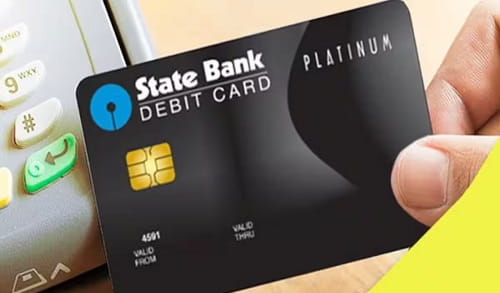
What Is SBI Debit Card EMI?
SBI Debit Card EMI is essentially a pre-sanctioned personal loan that SBI extends to select customers based on their banking profile. When you use this facility, the total purchase amount is converted into equal monthly instalments, which are auto-debited from your linked SBI savings or salary account every month.
This is distinct from a credit card EMI in an important way: with a debit card EMI, the money comes directly out of your bank account each month. There is no revolving credit; you are repaying an actual loan against your deposit account. Key highlights of the facility include:
- No credit card required — works purely through your SBI debit card and account.
- Pre-approved offers based on your existing banking relationship with SBI.
- Flexible loan amounts typically ranging from Rs. 5,000 to Rs. 5,00,000.
- Tenure options from 3 months up to 36 months depending on the offer.
- Interest rates generally between 11% and 14% per annum on a reducing balance basis.
- Minimal or zero paperwork for pre-approved customers.
- Available both at point-of-sale merchant terminals and on select online platforms.
SBI Debit Card EMI Eligibility Criteria
SBI evaluates a combination of internal banking parameters before extending the debit card EMI facility to a customer. The bank does not publicly disclose its full scoring model, but the following conditions are widely known to influence eligibility:
1. Account Type and Status
You must hold an active SBI savings account, salary account, or regular current account in good standing. Zero-balance accounts, Basic Savings Bank Deposit (BSBD) accounts, and accounts with restrictions are generally not eligible. Dormant, frozen, or legally attached accounts are excluded.
2. Account Vintage
The longer you have maintained your SBI account, the better your chances. Accounts that are at least 12 months old are typically preferred. Newly opened accounts with minimal transaction history are rarely offered this facility.
3. Average Monthly Balance (AMB)
SBI rewards customers who consistently maintain a healthy balance. A higher Average Monthly Balance signals financial stability and increases the likelihood of a pre-approved EMI offer. Customers who frequently fall below the minimum required balance are less likely to qualify.
4. SBI Debit Card Variant
Not every SBI debit card supports the EMI facility. The following card variants are more likely to be covered:
- SBI Platinum Debit Card
- SBI Pride Debit Card
- SBI INTOUCH Tap & Go Debit Card
- SBI Cashback Debit Card
- SBI Classic Debit Card (select cases)
Basic RuPay Classic or Maestro cards may not be eligible. Upgrading to a higher-tier card can improve your eligibility.
5. Credit Score (CIBIL / Experian)
Although this is a debit-based facility, SBI may review your credit bureau report as part of the assessment. A CIBIL score of 700 or above is generally considered favourable. A poor credit history — loan defaults, missed EMIs, or write-offs — can disqualify you.
6. Salary Credits and Income Flow
If your SBI account is a salary account, regular and consistent salary credits every month significantly strengthen your eligibility. SBI’s systems verify income patterns over the past 6 to 12 months to assess repayment capacity.
7. Existing Loan Obligations
If you already have multiple active loans or a high Fixed Obligation to Income Ratio (FOIR), SBI may reduce your eligible EMI limit or not extend the facility at all. Managing your existing debt responsibly is crucial.
8. Clean Transaction History
Your account must not have a record of bounced cheques, rejected ECS mandates, or penalty transactions in recent months. Such events signal repayment risk to the bank’s eligibility engine.
9. KYC Compliance
Your account must be fully KYC-compliant with updated identity and address proof. Accounts with pending or expired KYC documentation are not considered for pre-approved loan offers.
How to Check Your SBI Debit Card EMI Eligibility
SBI provides multiple channels through which customers can check their eligibility. Here is a detailed walkthrough of each method:
Method 1: YONO SBI App (Recommended)
YONO (You Only Need One) is SBI’s flagship digital banking app and the most convenient way to check your EMI eligibility.
- Download and open the YONO SBI app on your Android or iOS device.
- Log in using your MPIN, fingerprint, or face recognition.
- On the home screen, tap on ‘Loans’ or navigate to ‘Pre-approved Offers.’
- Look for ‘Debit Card EMI’ or ‘EMI on Debit Card’ under the offers section.
- If eligible, the app displays your pre-approved loan amount, interest rate, and available tenures.
- You can apply directly from this screen by selecting your preferred tenure and confirming with your OTP.
Method 2: SBI Internet Banking (OnlineSBI)
- Visit the official portal at onlinesbi.sbi and log in with your username and password.
- Navigate to the ‘e-Services’ or ‘Loans & Advances’ section from the main menu.
- Click on ‘Pre-approved Personal Loan’ or ‘Debit Card EMI.’
- The system checks your account in real time and displays your eligibility status.
- If eligible, you can review the offer details and apply online without visiting a branch.
Method 3: SBI ATM
- Visit any SBI ATM and insert your debit card.
- Enter your PIN and select ‘More Options’ or ‘Loan Services’ from the menu.
- Look for ‘Pre-approved Loan’ or ‘Debit Card EMI.’
- Follow the on-screen prompts. If eligible, the ATM will display the approved amount and let you proceed.
Note: Not all SBI ATMs may have this option; availability depends on the ATM model and software version.
Method 4: SBI Customer Care
Call SBI’s toll-free customer care at 1800-11-2211 or 1800-425-3800 (available 24×7) and request an eligibility check. Authenticate yourself using your account number, registered mobile number, and date of birth. You can also send an SMS from your registered mobile number to 567676 for quick queries.
Method 5: At the Point of Purchase
When shopping online on platforms such as Amazon, Flipkart, or Paytm Mall — or at physical merchant stores — you may be offered an EMI option at checkout when you select SBI Debit Card as the payment method. If your card is pre-approved, the EMI option appears automatically with a breakdown of monthly instalments.
Method 6: Visit Your SBI Home Branch
For customers who prefer face-to-face assistance, visit your nearest SBI branch. Speak to a relationship manager, who will access the system and inform you of your offer status. If eligible, they can assist you in applying on the spot.
SBI Debit Card EMI: Key Parameters at a Glance
| Parameter | Typical Details |
| Eligible Customers | Pre-approved SBI account holders |
| Minimum Loan Amount | Rs. 5,000 |
| Maximum Loan Amount | Up to Rs. 5,00,000 (profile-dependent) |
| Tenure Options | 3, 6, 9, 12, 18, 24, or 36 months |
| Interest Rate | 11% – 14% per annum (reducing balance) |
| Processing Fee | Rs. 199 to Rs. 1,499 + 18% GST |
| Prepayment Charges | Applicable; varies by remaining tenure |
| Repayment Method | Auto-debit from linked SBI account |
| KYC Required | Must be fully KYC-compliant |
Where Can You Use SBI Debit Card EMI?
SBI Debit Card EMI is accepted across a growing list of merchant categories and digital platforms:
- E-commerce platforms: Amazon India, Flipkart, Snapdeal, Paytm Mall, Tata Cliq.
- Consumer electronics and appliances: Croma, Vijay Sales, Reliance Digital, brand stores.
- Mobile phones: Official stores of Samsung, Apple, OnePlus, and other brands.
- Healthcare: Select hospitals, diagnostic centres, and dental clinics.
- Furniture and home decor: Urban Ladder, Pepperfry, IKEA (select categories).
- Travel and hospitality: Select booking portals and hotel chains.
- Education: Certain edtech platforms and coaching institutes.
Merchant availability may vary. Always confirm EMI availability with the merchant before initiating the transaction.
Step-by-Step Process to Apply for SBI Debit Card EMI
- Check your eligibility using any of the six methods described above.
- Review the pre-approved offer: note the loan amount, interest rate, and available tenures.
- Choose your purchase amount — it must be within the sanctioned limit.
- Select your preferred repayment tenure (e.g., 12 months or 24 months).
- Review the monthly EMI amount, total interest cost, and processing fee carefully.
- Accept the terms and conditions displayed on screen.
- Authenticate using the OTP sent to your registered mobile number.
- The EMI is activated immediately. Your account will be auto-debited on the monthly due date.
Common Reasons for Not Being Eligible
If you are unable to find a pre-approved offer or your request is declined, one or more of the following factors could be responsible:
- Your account is too new — less than 6 to 12 months old.
- Inconsistent or low Average Monthly Balance.
- Holding a basic or zero-balance savings account.
- Your SBI debit card variant does not support the EMI feature.
- Low credit score (below 650 on CIBIL).
- Existing high EMI burden or multiple active loans.
- Recent cheque bounces, failed ECS mandates, or penalty charges.
- KYC not updated or pending re-verification.
- Account flagged for suspicious activity or under legal hold.
Tips to Improve Your SBI Debit Card EMI Eligibility
If you are not currently eligible, the following steps can improve your profile over the coming months:
- Maintain a consistently higher Average Monthly Balance — ideally well above the prescribed minimum for your account type.
- Credit your salary regularly into your SBI salary account without interruptions.
- Improve your CIBIL score by repaying existing loans and dues on time.
- Upgrade your SBI debit card to a premium variant such as the Platinum or Pride card.
- Ensure your KYC documents are up to date and fully verified.
- Avoid bounced transactions, overdrafts, and late payment penalties.
- Reduce outstanding loan EMIs where possible to improve your debt-to-income ratio.
- Keep your SBI account active with regular transactions — payments, transfers, and bill payments all strengthen your banking relationship.
Important Things to Keep in Mind
Before opting for SBI Debit Card EMI, be aware of the following:
- Interest cost is real: Unlike some zero-cost EMI promotions on credit cards, debit card EMIs carry an interest charge. Calculate the total repayment amount before committing.
- Auto-debit on due date: Ensure your account has sufficient funds on the monthly due date. Insufficient balance may attract a dishonour charge and impact your credit record.
- Pre-closure penalty: If you wish to repay the loan before the tenure ends, a foreclosure charge (typically 2% to 3% of outstanding principal) may apply.
- Credit bureau reporting: The loan reflects on your CIBIL report. Timely repayment improves your score; any default can cause significant damage.
- GST on fees: The processing fee is subject to 18% GST, adding to your upfront cost.
- One EMI at a time: In most cases, only one active debit card EMI loan is permitted per account at a time.
- Not the same as credit card EMI: Debit card EMI reduces your actual savings account balance monthly, unlike credit card EMI which defers payment.
Conclusion
SBI Debit Card EMI is a valuable financial tool that brings instalment-based shopping convenience to millions of SBI customers who may not hold a credit card. The facility is quick to check, easy to apply for, and requires no physical documentation for pre-approved customers.
Checking your eligibility takes just a few minutes — log into YONO SBI or OnlineSBI and look for pre-approved offers under the loans section. If you are not currently eligible, a few months of consistent account management, a healthy balance, and a clean credit history can make a significant difference.
Always understand the total cost involved — including interest and processing fees — and ensure the EMI fits comfortably within your monthly budget. When used responsibly, SBI Debit Card EMI can be an effective way to manage large purchases without putting unnecessary strain on your finances.