
India’s freight and logistics system is becoming faster, more digital and more multimodal. A January 2026 government logistics review placed India’s logistics cost at 7.97% of GDP, while rail freight loading reached about 1,670 million tonnes in FY2025-26. Road transport still carries a huge share of domestic cargo, but rail-linked terminals, express networks, warehousing and technology-driven freight platforms are steadily changing how goods move across the country.
For this ranking, “transport companies” refers mainly to companies that move commercial freight through road, rail, express, multimodal and contract-logistics networks. Passenger airlines, bus operators and port operators are not included. The strongest companies increasingly do more than move a shipment from one city to another: they provide warehousing, first- and last-mile delivery, tracking, supply-chain management, cold-chain services and multimodal connections.
Here are the Top 10 Transport Companies in India in 2026, selected for operating scale, freight volumes, national network, transport infrastructure, technology, service breadth and current relevance.
1. Delhivery
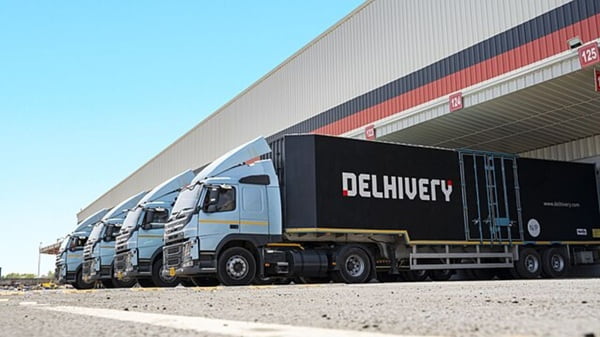
Delhivery takes the top position because it has built one of India’s largest technology-led freight and parcel networks. In FY2025-26, the company generated ₹10,486 crore in revenue from services, delivered 1 billion e-commerce parcels and moved about 2 million metric tonnes of part-truckload freight. It also became free-cash-flow positive during the year.
Its services now span express parcels, PTL freight, truckload, supply-chain services, cross-border logistics and intra-city delivery. Delhivery has also introduced AI-based transport-management tools, showing how technology is becoming central to route planning, freight procurement and shipment visibility.
2. Container Corporation of India (CONCOR)
CONCOR is India’s most important container rail-logistics company and a critical link between ports, inland container depots and industrial centres. For FY2025-26, it reported total sales of about ₹9,059 crore and net profit of approximately ₹1,222 crore.
Its strength comes from rail-based container movement, terminals and multimodal logistics rather than conventional trucking alone. As dedicated freight corridors and Gati Shakti cargo terminals expand, CONCOR is well placed to benefit from a larger shift of long-distance freight from road to rail.
3. Blue Dart Express
Blue Dart is one of India’s strongest express transportation brands. FY2025-26 revenue from operations reached ₹6,141 crore, while the company handled more than 403 million domestic shipments and over 1.43 million tonnes of cargo.
Its network includes more than 19,000 PIN codes, 33,000-plus ground vehicles, dedicated freighter aircraft and access to over 220 countries and territories through DHL Group. Blue Dart’s ability to combine time-definite air express with surface transportation makes it particularly important for high-value, urgent and business-critical shipments.
4. Mahindra Logistics
Mahindra Logistics has grown into one of India’s largest integrated logistics and mobility companies. FY2025-26 consolidated revenue reached about ₹6,999 crore, up 15% year on year.
Its core strengths include contract logistics, warehousing, transportation management, last-mile delivery and enterprise mobility. The company serves automotive, engineering, consumer, pharmaceutical, e-commerce and other sectors, making it particularly strong where clients want outsourced end-to-end logistics rather than a simple point-to-point transporter.
5. Transport Corporation of India (TCI)
Transport Corporation of India is one of the country’s most diversified freight companies. Its network covers road freight, rail, coastal shipping, warehousing, cold chain and cross-border logistics.
TCI operates more than 1,000 IT-enabled offices, around 10,000 trucks, six coastal ships and three AFTO trains, while managing more than 16 million square feet of warehousing space. Few Indian transport companies have comparable control across road, rail and sea, which gives TCI a strong position in multimodal logistics.
6. VRL Logistics
VRL Logistics remains one of India’s most important road-freight specialists. The company operates a fleet of 6,177 commercial vehicles and describes itself as the country’s largest fleet owner of commercial vehicles. Its network has grown from a single-truck business into a nationwide transport operation.
FY2025-26 revenue from operations reached about ₹3,221 crore, while profit after tax rose to roughly ₹237 crore. VRL is especially strong in less-than-truckload cargo, where dense branch coverage and an owned fleet allow tighter control over service quality than asset-light competitors.
7. Allcargo Logistics
Allcargo Logistics entered 2026 with a simplified structure after Allcargo Gati was merged into the company effective November 1, 2025. The merger brought express distribution and contract logistics together under one listed entity rather than leaving Gati as a separate company.
For FY2025-26, Allcargo Logistics reported revenue of about ₹2,058 crore. Its current network services more than 32,000 PIN codes and combines express distribution, supply-chain services and contract logistics. The company therefore remains an important national freight platform even though its corporate structure has changed substantially.
8. Safexpress
Safexpress is one of India’s largest privately held supply-chain and express-distribution companies. Its services include express distribution, third-party logistics and supply-chain consulting across industries such as healthcare, automotive, electronics, FMCG, publishing and e-commerce.
The company has built 73 logistics parks with more than 18 million square feet of warehousing space and says it can deliver to all 31,188 PIN codes in India. Its strength lies in scheduled surface transportation supported by large logistics hubs rather than a consumer courier model.
9. Gateway Distriparks
Gateway Distriparks is a major multimodal logistics company focused on container rail, inland container depots and container freight stations. It connects industrial regions with major ports and is particularly relevant for import-export cargo moving over long distances.
In Q4 FY2025-26, the company reported revenue from operations of about ₹534 crore. Gateway has continued expanding its inland network, including new ICD development and double-stack rail services. Its rail-led model provides an alternative to long-haul road movement for containerised cargo.
10. TCI Express
TCI Express specialises in time-definite B2B express transportation. Its services include surface express, domestic and international air express, rail express, e-commerce express and pharma cold-chain express.
The company has more than 950 branches and covers over 50,000 pickup and delivery locations. Its hub-and-spoke system and increasing use of automated sorting centres make it particularly relevant for businesses that value predictable transit times rather than only the lowest freight rate.
What Is Changing in India’s Transport Industry?
Transport is shifting from a road-only model toward multimodal networks. Dedicated freight corridors, inland terminals and container trains are making rail more competitive for long-distance cargo, while road transport remains critical for first-mile, last-mile and time-sensitive movement. Companies that can combine modes are increasingly valuable to manufacturers and retailers.
Technology is also changing operations. GPS tracking is now basic; larger transport companies are moving toward AI-based route planning, automated sorting, digital freight procurement, predictive maintenance and real-time visibility. At the same time, customers are paying more attention to damage rates, on-time delivery, claims handling and network reliability rather than comparing freight rates alone.
Conclusion
India’s leading transport companies in 2026 represent several different models. Delhivery leads through technology and parcel-plus-freight scale, CONCOR dominates container rail logistics, and Blue Dart remains a premium express specialist. Mahindra Logistics and TCI provide broad integrated supply-chain capabilities, while VRL remains exceptionally strong in owned-fleet road transportation.
Allcargo, Safexpress, Gateway Distriparks and TCI Express add important strength in express distribution, multimodal rail and time-definite B2B freight. As India’s manufacturing, e-commerce and trade volumes increase, the companies best positioned to win will be those that combine reliable physical networks with better technology, multimodal connectivity and consistent delivery performance.
FAQs
Q1. What is the difference between a transport company and a logistics company?
A transport company primarily moves goods from one location to another. A logistics company may manage a wider part of the supply chain, including transportation, warehousing, inventory, packaging, order fulfilment and distribution. Many large Indian transport companies now operate as integrated logistics providers, so the distinction is becoming less rigid.
Q2. When is part-truckload transport better than full-truckload transport?
Part-truckload, or PTL/LTL, is useful when a business does not have enough cargo to fill an entire truck and wants to share vehicle capacity with other shipments. Full-truckload is usually better for larger loads, dedicated movement or cargo that should not be repeatedly handled at intermediate hubs.
Q3. Why are rail-based freight companies becoming more important?
Rail can move large quantities of cargo over long distances with lower fuel use per tonne than road transport. Dedicated freight corridors, container terminals and better port connectivity are making rail more useful for containers, bulk cargo and long-haul industrial freight. Road transport is still needed at both ends of most rail journeys.
Q4. What should a business check before choosing a transport company?
Important factors include coverage on the required route, transit-time consistency, cargo insurance or liability terms, tracking quality, claims handling, proof-of-delivery systems, handling facilities and experience with the product being shipped. The lowest quoted freight rate can be expensive if delays or damage are frequent.
Q5. Why do some transport companies own fleets while others use contracted vehicles?
Owning vehicles gives greater control over maintenance, driver standards and availability, but it requires large capital investment. Contracted fleets allow faster scaling and lower fixed costs. Many large transport companies use a hybrid model so they can keep control on core routes while adding outside capacity during seasonal peaks.