
India’s technology industry crossed another major milestone in FY2025-26. NASSCOM projected sector revenue at about $315 billion, up 6.1% year on year, with IT services alone contributing roughly $149 billion. Direct technology employment was expected to reach about 5.95 million, while AI-related revenue from technology providers was already estimated at $10-12 billion.
The work itself is changing just as quickly. Large Indian IT companies are moving beyond application maintenance and traditional outsourcing into generative AI, cloud modernization, cybersecurity, digital engineering, data platforms and outcome-based transformation. Clients increasingly expect faster delivery and measurable productivity rather than simply larger teams.
Here are the Top 10 IT Software Companies in India in 2026, selected for financial scale, software and engineering capability, global client reach, AI and cloud strength and long-term relevance.
1. Tata Consultancy Services (TCS)
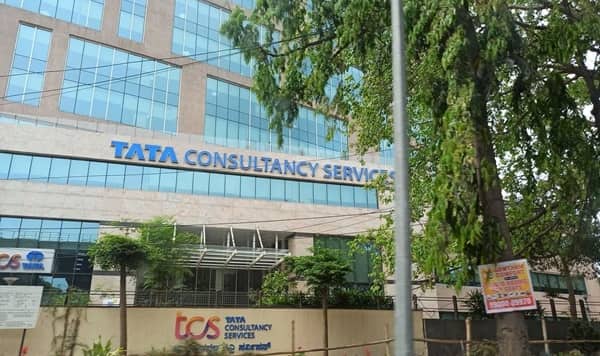
TCS remains India’s largest IT software and technology-services company. FY2025-26 revenue reached about ₹2,67,021 crore, or just over $30 billion, and year-end headcount stood at 5,84,519. Full-year deal wins reached $40.7 billion. TCS works across application development, cloud, cybersecurity, enterprise platforms, engineering, data and AI. Annualised AI revenue crossed $2.3 billion in Q4 FY2026, showing how quickly AI has become a commercial business for the company.
2. Infosys
Infosys remains one of India’s most important global software-services companies. FY2025-26 revenue reached about ₹1,78,650 crore, crossing the $20 billion mark, while total headcount stood at 3,28,594. Its strengths span cloud, consulting, enterprise applications, data, AI and digital engineering. Infosys says AI-led programmes are now deployed across 90% of its top 200 clients, giving the company a strong position as enterprise technology spending shifts toward AI-enabled transformation.
3. HCLTech
HCLTech combines IT services, engineering R&D and enterprise software more deeply than most Indian peers. FY2025-26 revenue reached about ₹1,30,144 crore, or $14.7 billion. HCLSoftware generated annual recurring revenue of around $1.05 billion, while annualised Advanced AI revenue reached $620 million by Q4. Its strength in infrastructure, engineering, cloud, software products and semiconductor-related services gives it a distinctive profile.
4. Wipro
Wipro remains one of India’s largest technology-services groups, covering application development, cloud, infrastructure, cybersecurity, engineering, data and consulting. FY2025-26 gross revenue reached about ₹92,620 crore, or $9.9 billion. Although IT-services revenue was broadly flat in constant currency, large-deal bookings rose to $7.8 billion. Wipro’s strategy is increasingly centred on AI-powered consulting and technology services.
5. Tech Mahindra
Tech Mahindra has a particularly strong heritage in telecommunications but now works across banking, manufacturing, healthcare, retail, automotive and technology. FY2025-26 revenue reached about ₹56,815 crore, or $6.39 billion. EBIT rose 39.2% and new-deal wins reached $3.79 billion. Telecom software, network engineering, cloud, customer experience and AI-led transformation remain core strengths.
6. LTM Limited (formerly LTIMindtree)
LTIMindtree officially changed its legal name to LTM Limited on March 17, 2026. FY2025-26 revenue reached about ₹42,308 crore, or $4.76 billion, with 87,950 employees at year-end. LTM works across cloud, data, enterprise applications, digital engineering and AI. Its 751 active customers include major companies across banking, manufacturing, consumer, technology and media sectors.
7. Coforge
Coforge has become one of India’s fastest-growing major IT services companies. FY2025-26 revenue reached about ₹16,421 crore, or $1.87 billion, representing 29.2% annual growth in dollar terms. It has particularly strong positions in travel, banking, insurance and public-sector technology. Its current strategy is increasingly AI-native, combining engineering, cloud, data and automation with deep industry expertise.
8. Mphasis
Mphasis is a Bengaluru-headquartered technology company with deep strength in banking, financial services, insurance, cloud and application modernisation. FY2025-26 revenue from operations was about ₹15,880 crore, up 11.6%. New contract wins reached around $2.1 billion, and the company said 60% were AI-led. Mphasis is also investing in its NeoIP platform portfolio and cloud engineering capabilities.
9. Persistent Systems
Persistent Systems has grown rapidly by focusing on product engineering, cloud, data, AI and digital engineering rather than traditional outsourcing alone. FY2025-26 revenue reached about ₹14,748 crore, or $1.65 billion, up 17.4% in dollar terms. It began FY2026-27 with more than 28,500 employees and remains especially strong in platform modernisation, software product development and AI implementation.
10. Hexaware Technologies
Hexaware remains an important global IT and digital-services company after returning to Indian public markets in 2025. Its capabilities cover cloud, data and AI, digital engineering, enterprise platforms and business transformation. The company has roughly 31,000-plus employees and annual revenue of around $1.4 billion based on its latest disclosed profile. In 2026, Brand Finance again placed it among the world’s Top 25 IT services brands.
How AI Is Changing India’s IT Software Industry
AI is changing the economics of Indian IT services. Code generation, testing, documentation, service-desk work and application maintenance can increasingly be accelerated by AI tools. Clients therefore expect fewer routine tasks and more automation, faster delivery and measurable business outcomes.
That does not mean software engineering is disappearing. Cloud architecture, cybersecurity, data engineering, AI integration, product thinking and domain knowledge are becoming more valuable. NASSCOM estimates AI-related revenues for India’s technology industry at roughly $10-12 billion in FY2026, while direct technology employment still increased during the year.
Conclusion
India’s leading IT software companies in 2026 are operating through one of the biggest technology shifts since the rise of cloud computing. TCS remains the clear scale leader, followed by Infosys and HCLTech, while Wipro and Tech Mahindra continue to serve huge global enterprise portfolios. LTM adds substantial mid-tier scale, and Coforge, Mphasis, Persistent and Hexaware show how quickly specialised firms can gain ground.
The next phase will be decided less by how many engineers a company can deploy and more by how effectively it combines software engineering, domain expertise, cloud platforms, data and AI.
FAQs
Q1. What is the difference between an IT software company and a product-based company?
An IT software or services company mainly earns revenue by building, integrating, maintaining or consulting on technology for clients. A product-based company earns a larger share from software or platforms it owns and sells repeatedly. Some companies operate both models.
Q2. Why do Indian IT companies earn so much revenue from overseas clients?
India built a global delivery model around a large technical workforce, English-language capability and decades of experience serving international enterprises. North America and Europe therefore remain major markets, although domestic technology spending and GCC work are growing.
Q3. Will AI reduce software jobs in Indian IT companies?
AI is likely to reduce some repetitive development, testing and support work, but it is also creating demand for AI engineering, data, cloud, cybersecurity and domain-led transformation. The bigger risk is for roles that do not evolve as productivity tools improve.
Q4. What should a fresher check before joining a large IT company?
Check the actual role, technology stack, project type, training quality and whether the work offers hands-on engineering exposure. A strong development, cloud, data or cybersecurity project can matter more to long-term growth than the company name alone.
Q5. Why can a smaller IT company grow faster than TCS or Infosys?
Large companies start from enormous revenue bases, so even a small percentage increase requires billions of dollars of additional business. Mid-sized firms can grow faster by specialising in high-demand areas, winning market share or making acquisitions.