
Many people lose track of loans — especially when they have taken multiple loans over the years from different lenders, or when someone has misused their documents to take a loan fraudulently. Knowing all the active loans registered in your name is critical for managing your finances, planning new credit applications, and protecting yourself from identity theft or fraud.
Fortunately, India has a robust credit bureau system that records every loan and credit facility linked to your PAN and Aadhaar. This guide explains all the methods to check every active loan on your name quickly and reliably.
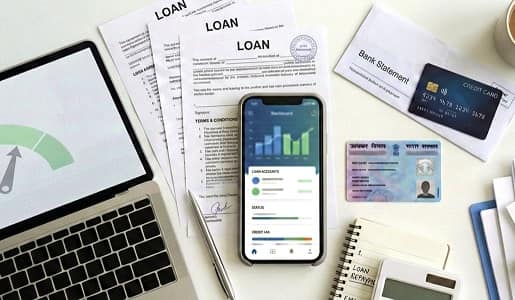
Method 1: Check Your CIBIL Credit Report (Most Reliable)
The Credit Information Bureau India Limited (CIBIL) is the most widely used credit bureau in India. Every loan — home loan, personal loan, car loan, education loan, credit card — is reported to CIBIL by lenders and appears on your credit report.
How to Get Your CIBIL Report
- Visit the official CIBIL website at cibil.com.
- Click on ‘Get Your Free CIBIL Score & Report.’
- Create an account using your PAN number, date of birth, and mobile number.
- Complete the identity verification via OTP.
- Your full credit report is displayed, listing every active and closed loan, credit card, and outstanding balance.
You are entitled to one free credit report per year from CIBIL. Additional reports can be accessed through paid subscription plans. The report clearly shows the lender name, loan type, sanctioned amount, outstanding balance, EMI amount, and account status (active, closed, or overdue).
Method 2: Check via Other Credit Bureaus
India has four RBI-licensed credit bureaus. Each may have slightly different data depending on which lenders report to which bureau. Checking all four gives a complete picture.
| Credit Bureau | Website | Free Report |
| CIBIL (TransUnion) | cibil.com | 1 per year |
| Experian | experian.in | 1 per year |
| Equifax | equifax.co.in | 1 per year |
| CRIF High Mark | crifhighmark.com | 1 per year |
Each bureau is mandated by the RBI to provide one free full credit report per year per individual. Simply register on each website with your PAN and you can download your complete loan history.
Method 3: Use Free Third-Party Credit Platforms
Several RBI-partnered platforms provide free, unlimited credit report access and make it easier to monitor loans on an ongoing basis:
- CRED — Shows all active loans and credit cards linked to your PAN.
- BankBazaar — Free credit report with loan account details.
- Paisabazaar — Free CIBIL report and loan tracker, updated monthly.
- OneScore — Free Experian credit report with detailed loan breakdown.
- IndiaLends — Free credit report with loan and credit card summary.
These platforms pull data directly from credit bureaus and present it in a user-friendly dashboard. They are safe, RBI-compliant, and do not charge for basic credit report access.
Method 4: Check via Your Bank’s App or Net Banking
If you have loans with a specific bank, you can log into that bank’s mobile app or internet banking portal and view your active loan accounts directly. For example, YONO SBI, iMobile Pay (ICICI), HDFC Bank App, and BOB World all display linked loan accounts under the ‘Accounts’ or ‘Loans’ section. This works only for loans taken from that particular bank.
Method 5: Contact Your Lender Directly
If you suspect a loan may have been taken in your name by someone else, or if you remember taking a loan but cannot find the details, contact the lender’s customer care directly with your PAN and Aadhaar. They can verify whether any active loan exists under your identity and provide account-level details.
Method 6: RBI’s CERSAI Portal (For Secured Loans)
CERSAI (Central Registry of Securitisation Asset Reconstruction and Security Interest) is an RBI portal that records all secured loans — home loans, loan against property, vehicle loans — where an asset has been pledged as collateral. You can search by property or vehicle details to check if a secured loan is active against your assets at cersai.org.in.
What Information Will You See in the Credit Report?
Once you access your credit report from any bureau, each active loan entry will show:
- Lender name and loan type (personal loan, home loan, credit card, etc.)
- Account number and date of opening.
- Sanctioned amount and current outstanding balance.
- Monthly EMI amount and payment history.
- Account status — Active, Closed, Overdue, or Written Off.
- Number of days past due (DPD) if any payment was missed.
What to Do If You Find an Unknown Loan
If your credit report shows a loan you never took, act immediately:
- Raise a dispute directly on the credit bureau’s website under the ‘Dispute’ or ‘Raise a Complaint’ section.
- Contact the lender whose name appears on the unknown loan and report it as fraudulent.
- File a complaint with the RBI Banking Ombudsman at bankingombudsman.rbi.org.in.
- File a police complaint (FIR) for identity theft or document misuse.
- Place a fraud alert on your credit profile — CIBIL and other bureaus allow you to flag your account.
Things to Keep in Mind
- Always use your own PAN number and registered mobile number to access credit reports. Never share your credit report login credentials with anyone.
- Credit reports are updated monthly by lenders. A loan taken very recently may take up to 30 days to appear.
- Checking your own credit report is a soft inquiry and does NOT affect your credit score.
- Monitor your credit report at least once every 3 to 6 months to catch unauthorised activity early.
- If your PAN or Aadhaar has been misused, report it immediately to UIDAI (1947) and Income Tax Department.
Conclusion
Checking all active loans on your name is straightforward — your CIBIL or any other credit bureau report gives a complete, accurate picture of every loan and credit facility linked to your PAN. For ongoing monitoring, free platforms like Paisabazaar or OneScore make it easy to track your loans monthly without any cost. Make it a habit to review your credit report regularly; it is the single most powerful tool to stay in control of your financial health and spot fraud before it becomes serious.